Featured Post

Welcome to Our Website

       We started making plans for this lifestyle 3 years ago.  We looked at all the options for travel- including trikes, hotels and a RV. ...

Friday, August 25, 2023

Hazelton Recreation Area - Hazelton ND

Hazelton Recreation Area - Hazelton, ND 

The Mandan Indian tribe established a village at the confluence of the Missouri and Heart rivers in about 1575. They built earthen lodges and thrived in their community by hunting bison and growing a number of crops. Two hundred years later, an outbreak of smallpox significantly decreased the Mandan population and the survivors resettled to the north.  During those years, the Mandan tribe had between seven and nine villages (all located along the Missouri River), with an estimated total population of 10,000 to 15,000. On-a-Slant was the furthest south of all these villages and consisted of approximately 86 earthen lodges. Its population numbered about 1,000–1,500. It was located near the point where the Heart River and the Missouri River come together and was named so by the Mandan because the village was built on ground that slopes towards the river valley. It was fortified with a ditch and palisade, to protect its wealth of food and trade goods.

The women of the Mandan tribe were completely responsible for building the earthen lodges, which were held up by a frame of cottonwood logs and covered with layers of willow branches, grass, and earth. These thick walls insulated the lodge effectively in both summer and winter. The top center of the earthen lodge contained a hole to let out smoke from the fire pit and to let in sunlight. The earthen lodges were placed close together with all entrances facing towards the village plaza in the center. Each lodge housed about ten to fifteen members of the immediate and extended family. The Mandan tribe lived on farming and hunting. The village became a center of trading because the Mandan were known for their ability to make pottery and prepare animal skins. In 1781, a smallpox epidemic ravaged the Mandan tribe, killing off a majority of the villagers. The remaining tribe members moved north to join the Hidatsa tribe along the Knife River.


The natives found a use for every part of the buffalo. The buffalo shoulder blades were used as hoes in their gardens.


These Mandan huts were built by the CCC as a replica of the villages that previously occupied this area.  The Mandan women built these in 5 days, which is a serious accomplishment.


On a Slant Village depicts what life may had been like for the Natives who lived in this area.

Fort Abraham Lincoln State Park is a North Dakota state park located 7 miles south of Mandan, North Dakota.

In June 1872, at the same location where the Mandan tribe had established their village, a military post named Fort McKeen was built by two companies of the 6th U.S. Infantry under Lt. Col. Daniel Huston, Jr. (1824-1884) opposite Bismarck, Dakota Territory.

The three-company infantry post's name was changed to Fort Abraham Lincoln on November 19, 1872, and expanded to the south to include a cavalry post accommodating six companies. Among the 78 permanent wooden structures at Fort Lincoln, there was a post office, telegraph office, barracks for nine companies, seven officer's quarters, six cavalry stables, a guardhouse, granary, quartermaster storehouse, bakery, hospital, laundress quarters, and log scouts' quarters. Water was supplied to the fort by being hauled from Missouri River in wagons, while wood was supplied by contract.  By 1873, the 7th Cavalry moved into the fort to ensure the expansion of the Northern Pacific Railway. The first post commander of the expanded fort was Lieutenant Colonel George A. Custer, who held the position until his death in 1876.

In 1876, the Army departed from here as part of the Great Sioux War of 1876-77, resulting in Custer's defeat at the Little Bighorn, where they were to push the non-treaty Indians back to their particular reservations. Custer along with about half of his troops did not return to Fort Lincoln. The Fort was abandoned in 1891 after the completion of the railroad to Montana in 1883. A year after the fort was abandoned; local residents disassembled the fort for its nails and wood. In 1895, a new Fort Lincoln was built across the river near Bismarck. In 1907, President Theodore Roosevelt signed the deed to the original fort's land over to the state as Fort Abraham Lincoln State Park.


These barracks at Abraham Lincoln State Park housed the enlisted men.


We visited Custer's home in Abraham Lincoln State Park.  This home was not the original one that Custer lived in but a replica built using the plans he used for designing his home.  


Lisa was standing in front of the Lewis and Clark artwork with Sacajawea.  These symbols are used all along the Lewis and Clark trail, just not to this size.


A model of the Keel Boat that Lewis and Clark used to get to Fort Mandan, which is now known as Bismarck.


The thunderbird is a legendary creature in particular North American indigenous peoples' history and culture. It is considered a supernatural being of power and strength.

It is especially important and frequently depicted in the art, songs, and oral histories of many Pacific Northwest Coast cultures, but is also found in various forms among some peoples of the American Southwest, East Coast of the United States, Great Lakes, and Great Plains. In modern times, it has achieved notoriety as a purported cryptid (an animal whose existence or survival is disputed or unsubstantiated), similar to creatures such as Bigfoot and the Loch Ness Monster.


Lisa and Karma are standing with the Thunderbird statue.


A replica of a sternwheeler on the Missouri River in Bismarck is on display.


We had never thought of Stern wheelers being used in the North Dakota territory as a means of transportation.  We had seen and read of their use on the Ohio and Mississippi Rivers but never considered them being used on the Missouri River.


Lisa and Karma are standing in front of an example of a stern wheel.


Lisa and Karma standing with a Buffalo on the State Capital grounds


Lisa and Karma were standing with the memorial to Sakakawea.


The North Dakota Capital building is a very differently designed  capital building than the ones we have commonly seen in other states.


Lisa and Karma were standing with the pioneer family erected as a  tribute to the pioneers that settled in the Northwest.


A statue as a tribute to the Pioneers of the Future and where North Dakota will lead.


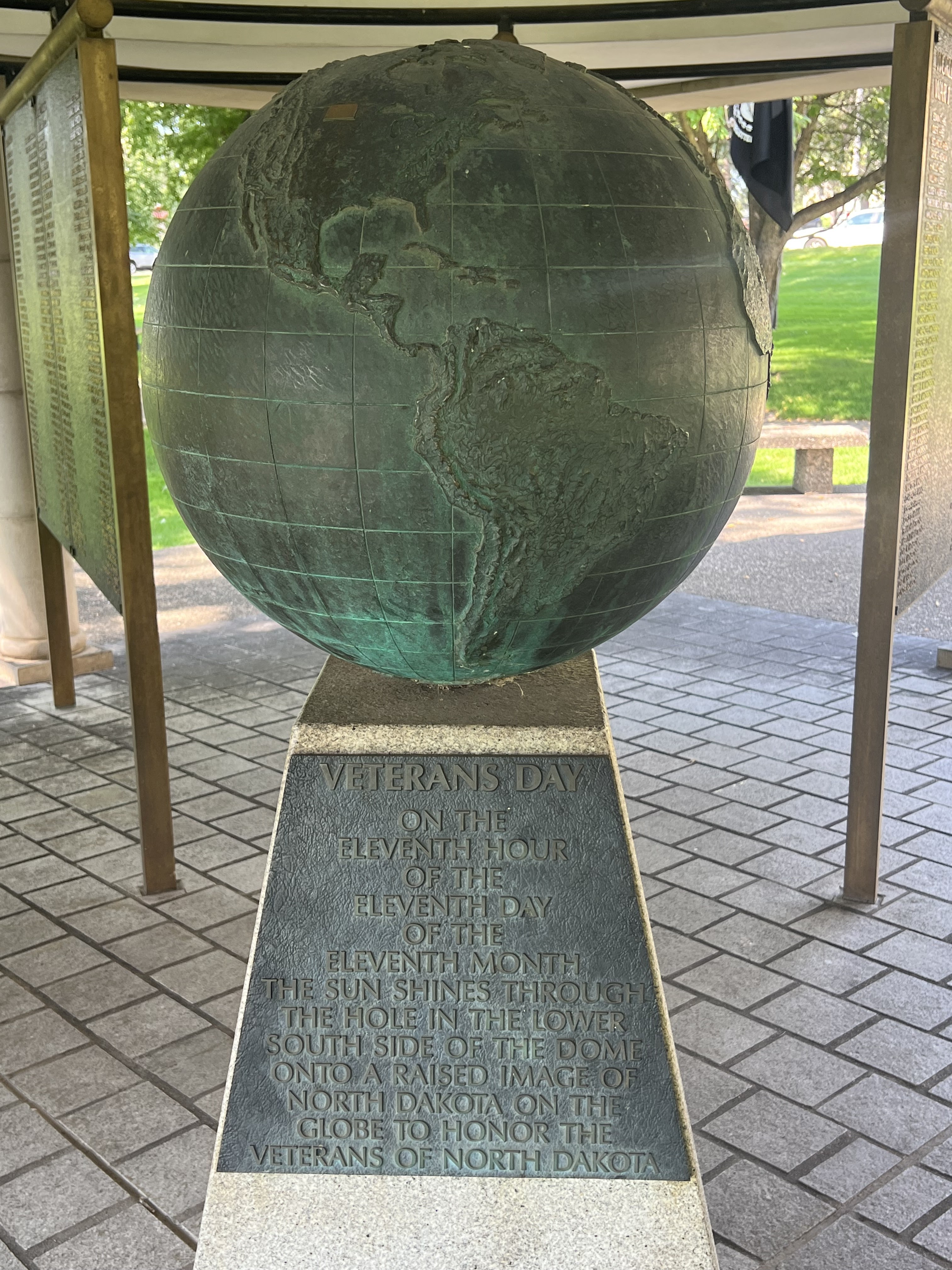
This was one of the more interesting Veteran Memorials we have visited.  The use of the Sun exemplifying North Dakota on Veterans Day,  was very Similar to the use of the sun shining on a specific spot through a hole in the wall that we saw in a Mayan Village in Tulum, Mexico. For the Mayans, it highlighted the Winter Solstice.


This is a tribute we have never seen in our travels.  Tribute to those lost and those that have served are common.  A special tribute to those who were wounded is very uncommon.


The French Gratitude Train, commonly referred to as the Merci Train, was one of 49 World War I era "forty and eight" boxcars gifted to the United States by France in response to the 1947 U.S. Friendship Train. It arrived in Weehawken, New Jersey on February 3, 1949.

The idea to send a "thank you" gift to the United States for the $40 million in food and other supplies sent to France and Italy in 1947 came from a French railroad worker, and World War II veteran, named Andre Picard. Donations for the Merci Train came from over six million citizens of France and Italy in the form of dolls, statues, clothes, ornamental objects, furniture, and even a Legion of Honor medal purported to have belonged to Napoleon were included as some of the donated gifts sent to the US.

The boxcars were "forty-and-eights" used during both world wars. The term refers to the cars' carrying capacity, said to be 40 men or eight horses. These boxcars were built starting in the 1870's as regular freight boxcars, they were originally used in military service by the French army in both World Wars, and then later used by the German occupation in World War II and finally by the Allied liberators.

In 1949, France sent 49 of those boxcars to the United States (one for each state and the Territory of Hawaii) laden with various treasures, as a show of gratitude for the liberation of France. This train was called the Merci Train, and was sent in response to trains full (over 700 boxcars) of supplies known as the Friendship Train sent by the American people to France in 1947. Each of the Merci Train boxcars carried five tons of gifts, all of which were donated by private citizens.

The Train and all 49 cars arrived aboard the Magellan on February 3, 1949, with over 25,000 onlookers in attendance. On the side of the gift-laden French freighter was painted, "MERCI AMERICA". Immediately the trains were distributed amongst the states.

 Neither of us were familiar with or had even heard of the Merci trains before. We stumbled onto these by chance while we were in Bismarck.  There are 43 boxcars still remaining that have not  yet been destroyed.  This was our first to see.  We have a new goal to visit the remaining 42.


Sunday, August 20, 2023

Left Tailtrace - Fort Thompson, SD

 Left Tailtrace - Fort Thompson, SD


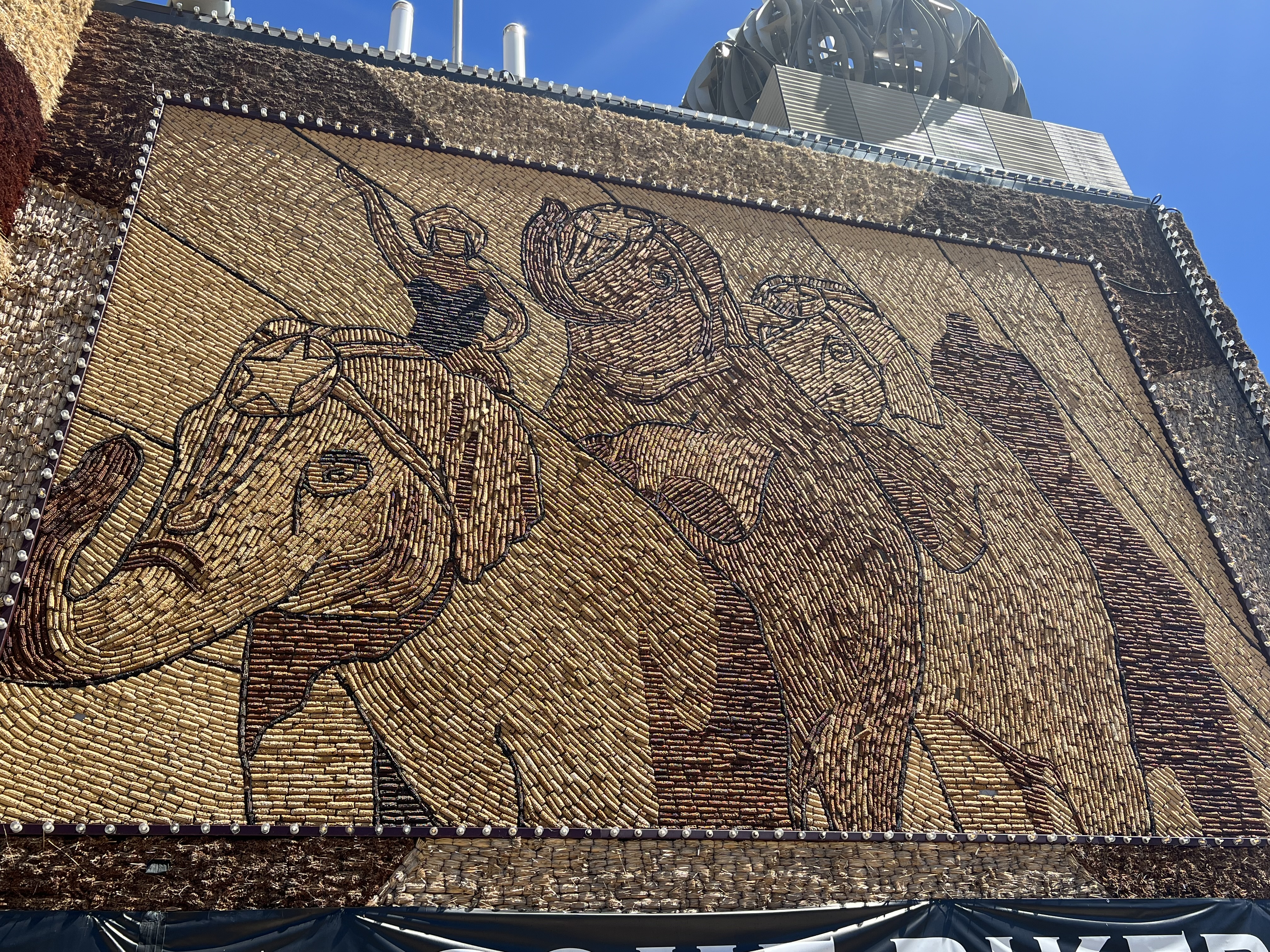
The Corn Palace is a multi-purpose arena/facility located in Mitchell, South Dakota. The Moorish Revival building is decorated annually with crop art. The elaborate murals and designs covering the exterior building and the interior walls are made from corn and other grains, and new designs are created and constructed each year.

The Corn Palace serves the area as a venue for concerts, sports events, exhibits and other community events. Every year, the community bands together to celebrates the Corn Palace at a citywide festival held in its honor.  Historically, it was held at harvest time in September, but recently, it has been held at the end of August. Over a million people a year visit Mitchell to stop and see the city's star (and only) attraction. The resulting tourism brings in revenue for the entire town.

In the late 19th century, a number of cities on the Great Plains constructed "crop palaces" (also known as "grain palaces") to promote themselves and their products. As the idea succeeded, it spread, including: a Corn Palace in Sioux City, Iowa, that was active from 1887–1891; a Corn Palace in Gregory, South Dakota; a Grain Palace in Plankinton, South Dakota; and a Bluegrass Palace in Creston, Iowa. From 1887 to 1930, at least thirty-four corn palaces were built across the Midwest United States. Only the Mitchell Corn Palace has remained intact to the present.

The original Mitchell Corn Palace (known as "The Corn Belt Exposition") was built in 1892 to showcase the rich soil of South Dakota and encourage people to settle in the area. It was a wooden castle structure on Mitchell's Main Street, constructed on land donated by Louis Beckwith, a member of the First Corn Palace Committee. In 1904–1905, the city of Mitchell mounted a challenge to the city of Pierre in an unsuccessful attempt to replace it as the state capital of South Dakota.

In 2004, national media attention was drawn to the Corn Palace, when it received Homeland Security funding. This drew criticism of the Department of Homeland Security and its grant program. In 2007, the Corn Palace subsequently received $25,000 in DHS funding for a camera system useful for several purposes, including Barack Obama's visit in 2008. The Mitchell Daily Republic, reported the cameras would help protect a "new Fiberglass statue of the Corn Palace mascot Cornelius" in 2009. This statue sits across Main Street, west of the Corn Palace.

Lisa stopped to visit with Cornelius. It's not every day you get the chance to have a photo op with a gigantic corn mascot.  Speaking of corn, we have bought a bunch of local corn from the farmers. We have not seen any produce stands with anything other than corn, but we would love to find some fresh, homegrown tomatoes. Harvest time makes us miss our garden and its bounty.


Lisa stopped to pose with a huge bison at Al's Oasis in Oacoma, SD- again, its not every day you get the chance for this photo op. We have seen several thousand bison in the parks up in the Dakotas, but this one is definitely the biggest one.


We spotted this stuffed buffalo in a grocery store. Many of the local stores sell buffalo meat and most restaurants feature bison on their menus. We try to make sure we eat whatever the local specialty is when we visit various, new parts of the country. 


In 2017, a local professor in Native American studies published the following in the Native newspaper:

As evidence shows throughout history, humans will ultimately disillusion and betray. As is such, I have a new role model who is solid and sturdy. She literally owns a spine of steel and reminds me of the injustice in the world, but also of strength, perseverance and survival. She signifies people who have prevailed through the centuries. She represents all who resist and strive forward. She portrays a rallying cry for those who wish to be heard and valued. She stands strong and proud, meeting the morning sun and bracing against the nighttime cold. She contemplates the world through a poise of conviction and fearlessness. Her name is "Dignity".


These Tipi poles were at the rest area near Chamberlain, SD. We have seen several other similar tipi poles throughout the Dakotas. We have asked several park rangers about the significance of the uncovered tipi poles, but no one seems to know. 


Lisa posed with the big ground hog inside the visitors center.

St. Joseph's Indian School is an American Indian boarding school, run by the Congregation of the Priests of the Sacred Heart just outside the city of Chamberlain, South Dakota. The school was named after Saint Joseph and is operated by a religious institute of the pontifical right. The school is within a two hour drive of three reservations of the Lakota people: the Cheyenne River Indian Reservation, the Lower Brule Indian Reservation and the Crow Creek Indian Reservation, whose children comprise the majority of students at the school. Most of the families are living in such extreme poverty, they are unable to even feed their children. Many of the students arrive to the school with nothing but an empty suitcase. The kids arrive owning almost nothing and leave with a suitcase packed full of gifts they receive while a student here.  Hopefully, many will learn the skills they need to escape the poverty that they grew up with. Many of the alumni come back to the school to "pay it forward" to the school and the students.   We visited the Akta Lakota Museum and Cultural Center located on the campus and owned by the school.

The Aktá Lakota Museum & Cultural Center is a private, non-profit educational and cultural outreach program. The museum was established to honor and preserve the Lakota culture for the students at St. Joseph’s Indian School and to foster among people who visit an appreciation of the culture.

The mission of the Aktá Lakota Museum is to promote the knowledge and understanding of the cultures of Northern Plains Native Americans through the preservation of historical and contemporary works of art. The Aktá Lakota Museum has one of South Dakota’s most comprehensive collections of Northern Plains Native American artwork and historical artifacts. The museum operates fully on donations and the admission is free to the public. We spent several hours enjoying this wonderful collection of artifacts and chatting with the staff as they shared stories of their ancestors and their culture.


We saw this Frito Lay special potato chip can in a local antique store. I recall similar cans of potato chips my family had delivered to our home when I was a kid. Ours were made by Charles Chips. 

Fort Thompson is located on the Crow Reservation. Our campground adjoined the reservation. Quite unknowingly, we discovered there was the Hunkpati Oyate Wacipi Pow Wow the weekend we were there. We went two days to the event because this was a first for both of us. We sampled several of the local specialties from the Native food vendors at the event. Apparently very few Native Americans like diet coke, because only one vendor had any (and it was my least favorite diet pepsi). It was about 98 degrees that day, so we could not be choosy. We were not sure what to expect, but many of the locals were very friendly and welcoming to us.

We had a bit of excitement when we left the arena the first time. On our way back to the campground, we came upon a motorcycle accident that had just happened. The young man was not wearing a helmet and was laying in a huge pool of blood. I will not go into graphic details, but it made this hardened old nurse gasp and feel weak kneed. He was missing about a fourth of his face. Parts were exposed and dangling where they should not be. We never found the missing facial bones/pieces. Some how he was conscious, although he was confused and agitated. He would be the perfect poster child for why you should wear a helmet. We stayed with him, tried to reduce the bleeding and keep him from hurting himself until EMS arrived. There was not much I could do for him, unfortunately.  Oddly, the next day I just happened to randomly ask one of the young locals if she knew about him-and she did. He was still alive after several surgeries but in very critical condition. I wish I was able to follow his case, but I doubt a good outcome is in the cards for him.

The Tribal Chief was leading the procession onto the Pow Wow grounds as part of the ceremonial opening parade. Customs, rituals and pride in their heritage were abundantly obvious by both the young and the old.


The Tribal royalty were led onto the grounds. The royalty are a relatively new addition to the ceremony. A contest is held before the pow wow to appoint a young Princess (and in some cases a Warrior as well) to represent their tribe/community. Since tribes do not actually have royalty, the terms are designated in name only. The understanding I have was the contest was like a pageant to appoint a "Miss Crow" (instead of a Miss Utah...), like a Miss America pageant, to represent her tribe. 


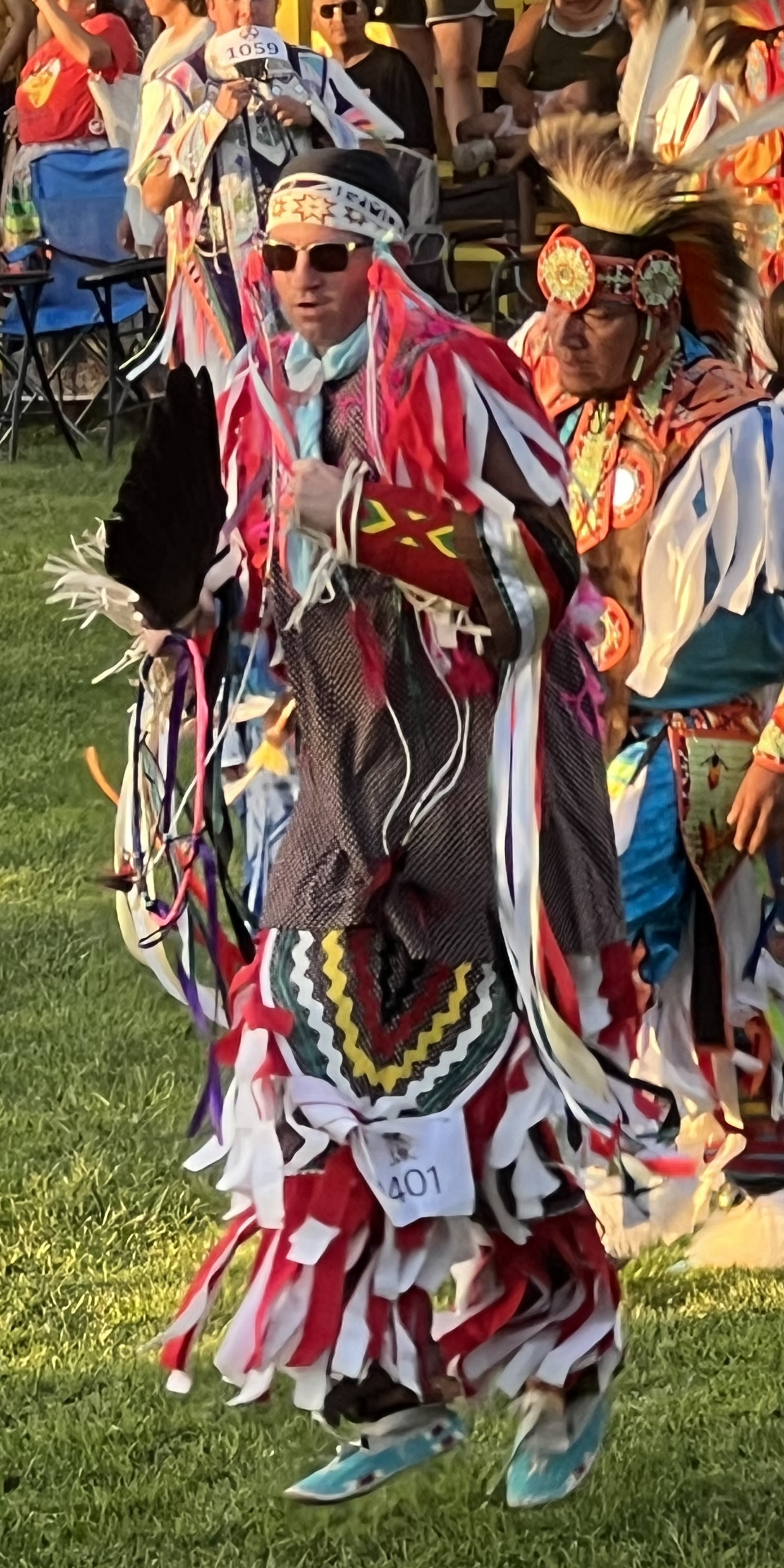
The National Champion Grass Dancer was competing at this pow wow. We were unaware of the different dances and their accompanying customary regalia. Apparently, referring to their ceremonial regalia as a "costume" is about the most disrespectful thing a non-native visitor can say to a native dancer. Luckily, we read that prior to attending the pow wow so we knew not to offend or disrespect anyone.  It takes years and many thousands of dollars to acquire the full regalia they hold so dearly and wear so proudly.  


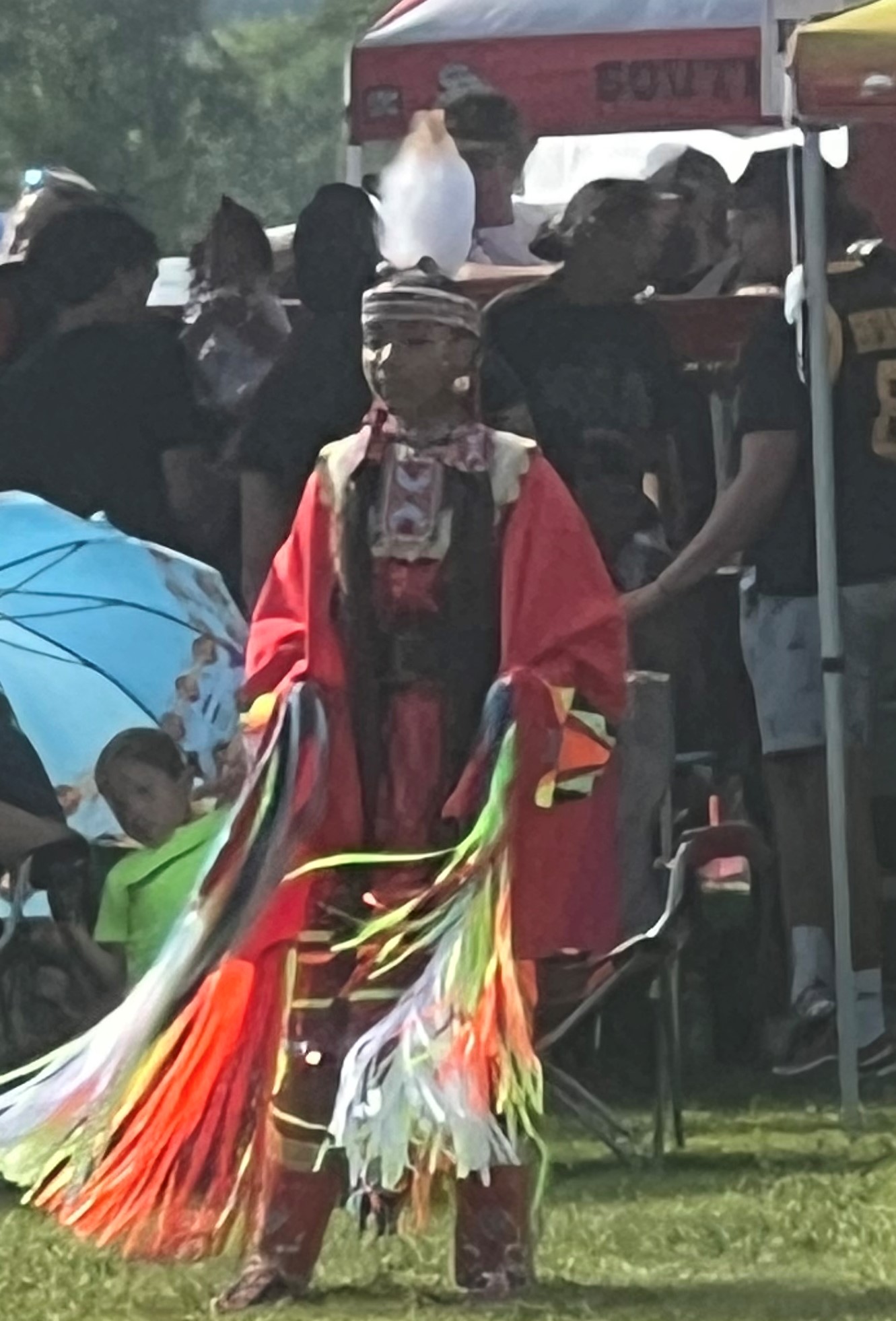
Male and female, both young and old, Native Americans in full regalia were performing celebratory dancing rituals they learned from their elders in regalia their elders helped them prepare. Tradition and customs are held with the utmost respect by the tribal members. Their sacred traditions are passed down with honor through the generations. It was uplifting to see so many children and young people carrying on the traditions of their ancestors under the direction of their elders.
Extreme poverty and very low standards of living are a way of life for far too many who live on tribal land. Discrimination, poverty, addiction and violence are permeated throughout the lives of the natives. It is not uncommon for 3 generations to live in one small, cramped living space that lacks access to sufficient food, heat, air conditioning, plumbing and other basics of necessity for a healthy life. Life on the  reservations is often compared to life in a third world country with a significantly lower life expectancy than the rest of our country. It was very concerning to see and read about how accepting many are to this lifestyle. Many are content to live this way rather than being motivated to break this cycle of the generations before them. Our government continues to enable them by perpetuating their dependency on the government rather than helping them escape this ugly cycle and gain independence and success.

It was horribly hot, so it seemed to be a perfect time to take a day off to stay home, catch up on our chores and maybe squeeze in a much needed afternoon nap. Taking naps is one of the best and least talked about benefits of retirement. We should have done this years ago!